
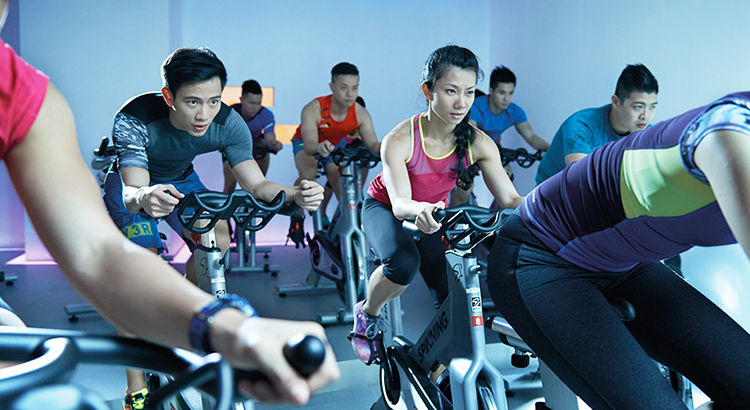
Walk into a spinning studio a decade ago and the technology involved was straightforward: a stationary bike, a sound system, and a heart rate monitor if you were particularly data-driven. Walk into a modern RPM class today and the landscape is considerably more sophisticated. Wearable devices, performance tracking platforms, smart bike consoles, and AI-informed coaching tools have fundamentally changed how riders train, measure progress, and stay motivated across their fitness journey.
For Singaporeans who are naturally comfortable with technology and who expect their fitness experience to be as connected and data-rich as the rest of their lives, this evolution in fitness tech is genuinely exciting. And for those who are newer to spinning classes and wondering whether any of these tools are worth the investment, this article offers a clear-eyed look at what is available, what actually makes a difference, and how to use technology to enhance rather than overcomplicate your indoor cycling experience.
The Rise of the Connected Fitness Ecosystem
Modern fitness technology does not operate in isolation. Wearables, gym equipment, smartphone apps, and cloud platforms increasingly communicate with each other, creating a connected fitness ecosystem in which data flows from your body to your device to your training log to your coach or app, and back to you as actionable insight.
This connectivity is particularly powerful in the spinning context because indoor cycling generates a rich stream of quantifiable data: cadence (pedalling speed in revolutions per minute), power output (measured in watts on smart bikes), heart rate, perceived exertion, and calories burned. When this data is captured accurately and reviewed consistently, it becomes the foundation for genuinely intelligent training decisions rather than generic effort.
Wearables in the Spinning Studio: What Works and Why
Heart Rate Monitors Heart rate is the most fundamental and immediately useful metric for spinning class participants. Monitoring your heart rate during a session tells you whether you are working in the aerobic zone that builds cardiovascular efficiency, the threshold zone that improves lactate clearance, or the high-intensity zone that drives cardiovascular fitness gains and triggers the afterburn effect.
Chest strap heart rate monitors remain the gold standard for accuracy during vigorous exercise. The Polar H10, for example, delivers medical-grade accuracy and pairs seamlessly with most fitness apps. Optical wrist-based monitors in devices like Apple Watch and Garmin watches are convenient and sufficiently accurate for most recreational spinners, though they can occasionally lose accuracy during intense exercise when wrist movement and sweat interfere with the optical sensor.
For Singaporeans attending spinning classes, a simple heart rate-based training approach, spending different portions of each class in different heart rate zones, is one of the most effective and underutilised strategies for improving fitness outcomes over time.
Apple Watch and the Fitness App Ecosystem Apple Watch is ubiquitous in Singapore’s urban fitness community, and for good reason. Its native workout tracking for indoor cycling captures heart rate, active calories, and workout duration with solid reliability. When paired with third-party apps like Strava or Garmin Connect, the data can be exported and analysed across longer time periods to track fitness trends.
One genuinely useful feature for spinning class participants is the Apple Watch’s ability to show real-time heart rate on the watch face during class, allowing you to self-regulate intensity without needing to interpret the instructor’s cues. For beginners who are still learning to calibrate their effort by feel, this real-time feedback is particularly valuable.
Garmin Devices and Advanced Metrics Garmin’s fitness wearables go deeper into the data than most casual exercisers require, but for those who enjoy the detail, the additional metrics are valuable. Garmin devices track training load, recovery time recommendations, and fitness age over extended periods. The Body Battery feature, which estimates your readiness to train based on sleep quality, heart rate variability, and recent training load, is a genuinely useful tool for deciding whether to push hard in a spinning class or take a recovery session.
WHOOP and Recovery-Focused Wearables WHOOP has found a strong following among serious fitness enthusiasts in Singapore. Unlike most wearables, WHOOP focuses not on workout metrics but on recovery and readiness. It measures heart rate variability, respiratory rate, and sleep quality to generate a daily strain and recovery score. For spinning enthusiasts who train multiple times per week, understanding recovery status helps prevent overtraining and allows genuinely optimal training decisions.
Smart Bikes and Performance Data
While the RPM bikes used in group spinning studios are not typically connected to individual tracking apps in the same way as home smart bikes, the technology ecosystem surrounding indoor cycling has advanced significantly. Some studios globally are beginning to integrate display systems that show live performance data for each rider during class, gamifying the experience and creating motivational competitive elements within the group.
Cadence monitoring is increasingly available through footpods, which are small sensors that clip to shoes and transmit pedalling speed to a connected app. For spinning class participants who want to track their cadence throughout a session without access to a connected bike console, a Garmin Running Dynamics Pod or similar device clipped to cycling shoes provides this data reliably.
Fitness Apps That Enhance the Spinning Experience
Beyond wearables, a range of smartphone applications add value to the spinning class experience by helping participants plan, track, and analyse their training.
Strava While primarily associated with outdoor running and cycling, Strava’s indoor cycling tracking and community features translate well to the spinning context. Logging RPM classes on Strava allows participants to track their training volume over time, celebrate achievements through the app’s segment and kudos system, and stay connected to a broader fitness community.
MyFitnessPal and Nutritional Integration For spinning class participants who are tracking nutrition alongside their training, MyFitnessPal’s integration with most major wearables allows calories burned in spinning sessions to be automatically reflected in the app’s nutritional balance. This integration helps participants understand their actual energy needs rather than guessing, which is particularly useful for those managing weight alongside their fitness goals.
Heart Rate Zone Training Apps Apps like Zones for Training (Apple Watch) or Polar Beat display real-time heart rate zone information in an intuitive colour-coded format, making it easy to see at a glance whether you are in the zone you want to be in during different phases of a spinning class.
AI and the Future of Personalised Spinning Coaching
Artificial intelligence is beginning to enter the group fitness space in interesting ways. AI-powered fitness platforms are increasingly able to analyse individual performance data across multiple sessions to generate personalised training recommendations, predict optimal recovery periods, and identify patterns that a human coach reviewing session data manually would be unlikely to spot.
In the context of group spinning, AI coaching is more likely to inform the pre- and post-class experience than the class itself. Platforms that analyse your heart rate history, recovery metrics, and training load can recommend whether you should attend a high-intensity or moderate session on a given day, suggest how long to warm up before a challenging class, or flag that your heart rate variability suggests you are under-recovered and should hold back during intervals.
True Fitness Singapore instructors bring human expertise, motivation, and real-time group reading that no AI platform currently replicates in a live class setting. But technology and expert human instruction are not competing forces; they are complementary tools that together enable a richer, more personalised fitness experience than either provides alone.
Practical Technology Recommendations for Spinning Class Participants
Not everyone needs or wants a full suite of fitness technology. Here is a practical framework for different levels of engagement:
- Beginner: A basic heart rate monitor or wrist-based wearable is sufficient to start tracking effort and understanding training zones. A simple sports app to log sessions provides a useful record of progress.
- Intermediate: A more capable wearable like an Apple Watch or Garmin that tracks multiple metrics and integrates with nutrition and recovery apps adds meaningful depth to your training data.
- Advanced: Adding recovery-focused tools like WHOOP, monitoring heart rate variability trends, and using AI-informed platforms to plan training load across the week allows genuinely sophisticated self-coaching that would previously have required a personal coach.
FAQ
Q. Do I need to buy expensive fitness technology to benefit from spinning classes? A. Absolutely not. The benefits of spinning, improved cardiovascular fitness, lower body strength, stress reduction, and calorie burn, are delivered by the exercise itself regardless of what technology you use to measure it. Fitness tech enhances insight and motivation but is never a prerequisite for a valuable spinning experience. Many experienced spinners train by feel without any device data.
Q. Can I use my Apple Watch during a spinning class without it sliding around on my wrist? A. Yes, though it helps to wear the watch slightly higher on the wrist during vigorous exercise, as this improves the optical heart rate sensor’s contact with the skin. A fitted sportswear sleeve or wristband below the watch can also help keep it stable during high-cadence intervals.
Q. Are the calorie counts shown on fitness apps accurate for spinning classes? A. Calorie estimates from wearables and apps are useful approximations rather than precise measurements. Most devices estimate spinning calories based on heart rate and body weight, which captures a meaningful proportion of the actual energy expenditure but is not laboratory-accurate. Calorie counts from spinning sessions are generally more reliable than those from some other exercise types because heart rate tends to be sustained and measurable throughout the class.
Q. What is heart rate variability and why does it matter for spinning training? A. Heart rate variability refers to the variation in time between consecutive heartbeats. Higher variability generally indicates better recovery and greater parasympathetic nervous system activity, while lower variability suggests the body is under stress or fatigued. Monitoring HRV over time, which devices like WHOOP and Garmin do automatically, gives you a daily readiness indicator that helps you decide whether to push hard or take a lighter session. For spinning enthusiasts training three or more times per week, HRV tracking is a genuinely useful tool for avoiding overtraining.
Q. Will fitness trackers interfere with the spinning class experience or distract me? A. This depends on the individual. Some people find the data motivating and use it to push themselves appropriately during intervals. Others find that checking their watch interrupts the flow and group energy of the class. A practical approach is to set up your device before class so it is recording automatically, check it only at natural rest points rather than mid-interval, and review the session data after class rather than during it.